FEEDBACK
If you are interested in our products and want to know more details, please leave a message here, we will reply you as soon as possible.

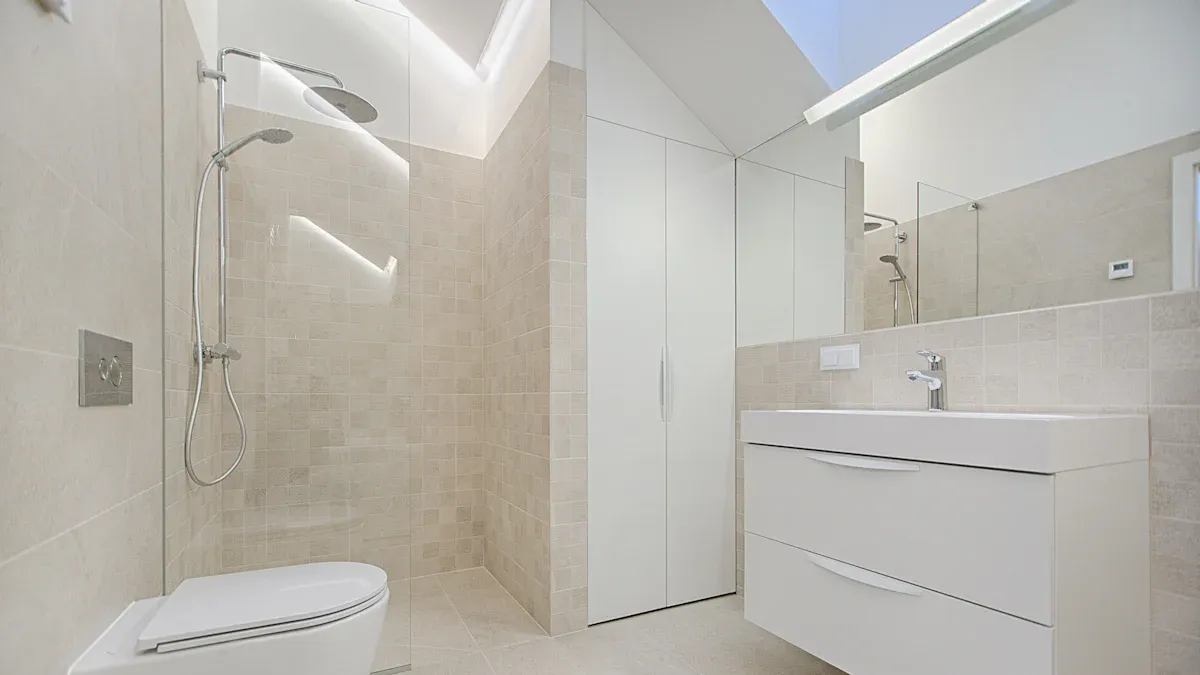
Are you struggling with Choosing Waterproof Material for your bathroom? You want surfaces that can handle constant steam, splashes, and daily cleaning. If you pick the wrong one, you might face swelling, warping, or mold. PVC promises total water protection, while plywood claims strength with some water resistance. Your choice matters for how long your bathroom stays looking fresh and easy to clean.
Before you choose a material, you should know what "waterproof" and "water-resistant" mean. These words look alike, but they are not the same. They can change how your bathroom lasts.
Plasterboard and most wood-based materials do not like water. If they get wet, they can break or fall apart. Water-resistant backgrounds let water move through them, but they do not change shape. This means water can go behind the surface. Waterproof means water cannot get through at all. Waterproof products also keep things strong.
Water-resistant materials can handle some water. They stop working well if there is a lot of water or strong streams. When too much water hits them, they start to soak it up. This can hurt them for good. Waterproof materials can take any amount of water. They have a special layer that keeps water out.
PVC is different because it is fully waterproof. You can splash or soak PVC, and water will not get inside. The surface blocks all moisture. You do not need to worry about swelling or mold. PVC stays strong and keeps its shape in steamy bathrooms. If you want something that will never let water ruin your cabinets or walls, PVC is the best choice.
Marine-grade plywood is better than regular plywood. It is made for wet places. Builders use strong wood and glue that does not let water in. This makes marine plywood resist water more than normal plywood. Here is why it is special:
Marine plywood works well in damp places.
It fights water better than regular plywood.
It lasts longer when wet.
It is made for places with lots of water.
But marine-grade plywood is not fully waterproof. If water sits on it or gets in cracks, it can soak up water. This can make it swell or get damaged if it stays wet. So, marine plywood is tough, but PVC is better for total waterproofing.
When you look at PVC for your bathroom, you see a material that stands up to water. PVC does not swell or rot, even if your bathroom feels like a steam room every day. You can splash water on it, and it stays the same. That sounds perfect, right? But PVC has some weak spots you should know about.
PVC panels are lightweight, so they can dent or crack if you bump them hard. In busy bathrooms, kids or pets might hit the walls or cabinets. Thin PVC panels warp quickly. If you rush the installation, the adhesive may not bond well, and panels can peel off. Sometimes, moisture gets trapped behind panels, causing hidden mold. Sealants can break down without you noticing. If you use non-waterproof trims in showers, they may fail. Soap scum and limescale can damage the surface finish. Surface patterns wear off faster than you expect. Poor ventilation makes mold grow. Misaligned panels look bad and wear unevenly.
Tip: Always check that your PVC panels are rated for constant water exposure. Good ventilation helps prevent mold and keeps your bathroom fresh.
How long does PVC last in a humid bathroom? Most PVC products give you 7 to 10 years of solid use. Some high-quality PVC can last longer, but that is not typical for every product.
Material | Lifespan in High Humidity |
|---|---|
PVC | |
Plywood | 15-20 years (or more) |
Plywood, especially marine-grade, can handle moisture better than regular wood. You get cabinets that feel sturdy and look classic. Plywood does not dent as easily as PVC. If you take care of it, plywood lasts 15 to 20 years or more in high-humidity bathrooms.
But plywood needs your attention. You must clean and inspect it often to stop moisture from building up. Reapply moisture-resistant sealants to keep water out. Check the hardware for rust. Humidity can make plywood warp, so you need to watch for changes. If you skip these steps, plywood can swell or lose its shape.
Note: Plywood rewards you with long life if you keep up with maintenance. A little effort goes a long way.
You get more years from plywood, but you also take on more work. PVC gives you easy care, but it may not last as long.
You’ll love how easy it is to keep PVC surfaces clean in your bathroom. PVC doesn’t absorb water, so you don’t have to worry about stains or swelling. Most of the time, you just need a soft cloth and some mild soap. Wipe down the panels or cabinets, and you’re done. If you see soap scum or water spots, grab a gentle cleaner. Avoid harsh chemicals because they can dull the finish.
PVC doesn’t need special treatments or sealants. You won’t spend weekends refinishing or sealing. If you spill shampoo or toothpaste, just wipe it up. PVC resists mold and mildew, so you don’t need to scrub hard. For tough spots, use a non-abrasive sponge. You can even use a little vinegar for stubborn grime.

Steel has true quality,Steel good steel need steel popular,We take the trend fashion sanitary ware market as the guidance, the first stainless steel product series in the industry
Steel has true quality,Steel good steel need steel popular,We take the trend fashion sanitary ware market as the guidance, the first stainless steel product series in the industry