FEEDBACK
If you are interested in our products and want to know more details, please leave a message here, we will reply you as soon as possible.

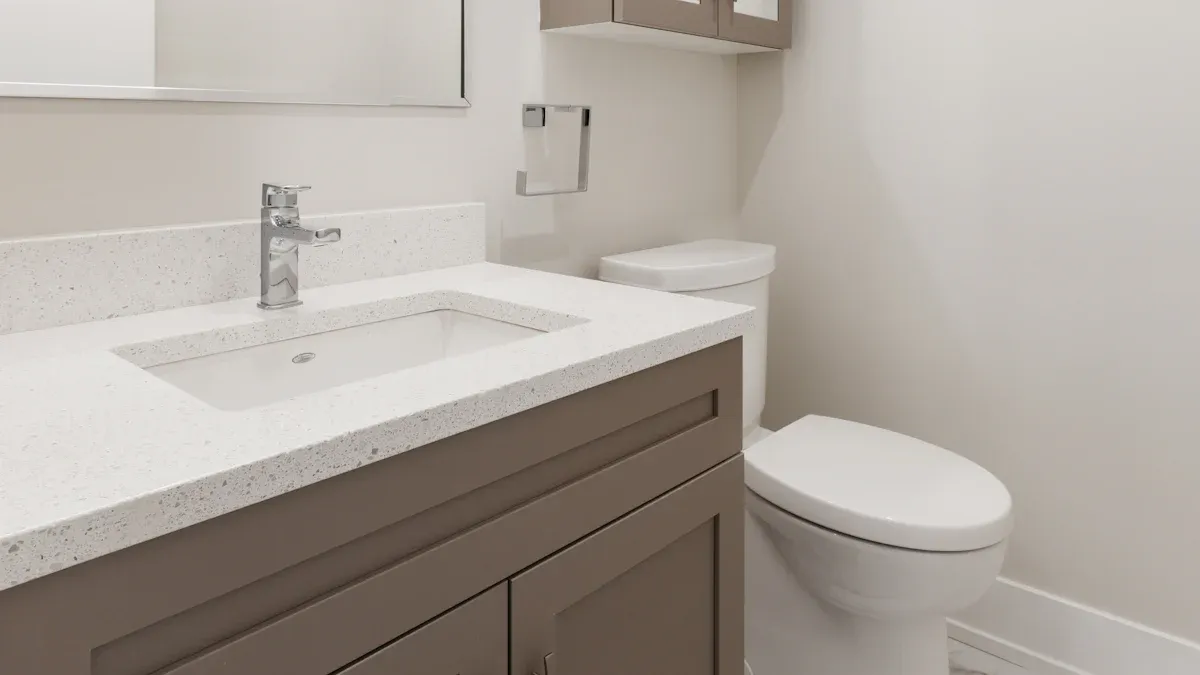
You want to buy a stainless steel vanity. You want to make a good choice. Check these five things: stainless steel grade, steel thickness, hardware quality, certification, and design. Use this Buyer's Checklist to help you. It can stop problems like hardware rust or installation complaints. Here are some problems buyers talk about:
Quality Issue | Description |
|---|---|
Hardware Rust | Happens in places near the ocean or where it is very humid. |
Installation Complaints | Complaints about how hard it is to install. |
The grade of stainless steel is very important. It helps your vanity look nice and stops rust. This is extra important in bathrooms with lots of moisture. If you choose a lower grade, rust can show up fast. The surface may also lose its shine. Grade 304 stainless steel is better because it has more chromium and nickel. These metals protect the steel from rust and keep it shiny.
Here’s a simple table showing grade 304 and grade 201:
Feature | Grade 304 Stainless Steel | Grade 201 Stainless Steel |
|---|---|---|
Chromium Content | 18–20% | 16–18% |
Nickel Content | 8–10.5% | Lower |
Rust Resistance | High | Moderate |
Best Use | Bathrooms, kitchens | Dry indoor areas |
Grade 304 is best for bathroom vanities. Always check the steel grade first when you shop.
It is important to spot real grade 304 stainless steel. Makers use different codes and names for this steel. Here is a table to help you know them:
Region/Standard | Designation | Description |
|---|---|---|
International (ISO) | X5CrNi18-10 | Shows 304 stainless steel with certain chemicals |
Europe (CEN) | 1.4301 | Has exact chemicals and strong performance |
China (GB) | 06Cr19Ni10 | Used for making steel in China |
Common Names | 304, SUS 304, 18/8 | All mean food-safe steel with 18% chromium, 8% nickel |
Look for clear marks like SUS304, 304, or 18/8 on the vanity. Do not trust marks that are hard to read or stickers. You can use these easy tests:
Magnet test: 304 steel does not stick to magnets.
Spark test: Grinding makes short, red sparks.
Chemical test kit: Use a kit and watch what happens.
Physical inspection: 304 steel feels heavy and smooth.
Acid test: 304 does not get damaged by nitric acid.
Tip: Real 304 stainless steel looks silver-white and shiny. If you see rust or holes, it may not be real.
Always ask for proof or test reports. Good sellers will show you samples or papers. If the price is very low, be careful. The Buyer's Checklist helps you make smart choices and buy safely.
When you shop for a stainless steel vanity, you might see numbers like 16-gauge or 18-gauge. These numbers tell you how thick the steel is. Lower numbers mean thicker steel. Thicker steel feels solid and resists dents, so your vanity lasts longer. If you pick a thin vanity, it can bend or get damaged more easily. You want something sturdy, especially in a busy bathroom.
Take a look at this chart. It shows how gauge numbers match up with thickness in millimeters:
Gauge Number | Thickness (mm) |
|---|---|
16 | 0.6 |
18 | 0.4 |
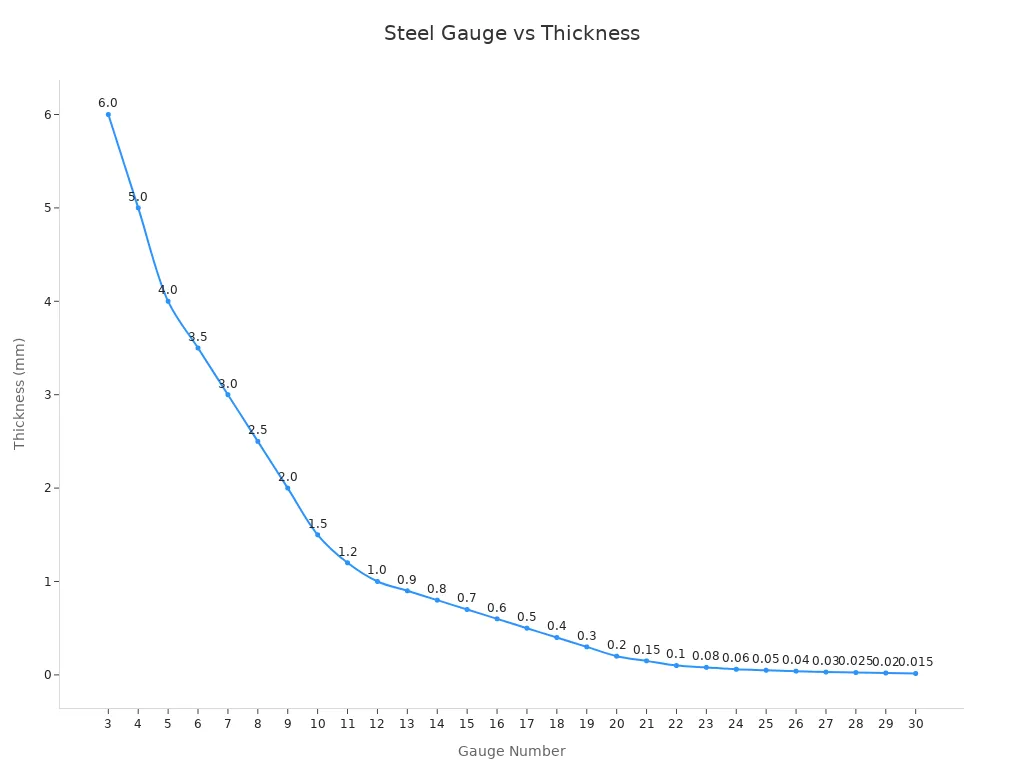
Most experts say 16-gauge steel is the most durable. It costs more, but it stands up to heavy use. 18-gauge steel is also popular. It gives you a good balance between price and strength.
You can check the gauge in a few ways:
Look for the gauge number on the product label or description.
Ask the seller for a sample or test report.
Use a caliper to measure the thickness if you want to be sure.
Here’s a quick guide to help you choose:
Gauge | Description | Recommendation |
|---|---|---|
16 | Thicker steel, high durability | Recommended for long-term use |
18 | Medium thickness, good balance | Suitable for various applications |
If you want your vanity to last, use the Buyer's Checklist and pick a thicker gauge. You’ll notice the difference in how solid it feels and how well it holds up over time.
You want your vanity to last a long time. Small parts like hinges and slides are important. You use them every day. If they break, doors or drawers may not work. Wet bathrooms can make these parts rust or snap. You can find problems early if you check carefully.
Here’s a table to help you spot common issues:
Hardware Component | Likely Failure Type | Inspection Method |
|---|---|---|
Stainless Steel | Crevice Corrosion | High-power loupe inspection |
Bolts | Stress Cracking | Regular dye testing or proactive replacement |
Load-bearing parts | Corrosion due to stress | Polishing and visual inspection |
When you shop, open and close the doors and drawers. Listen for squeaks or grinding sounds. See if they move smoothly. Look at the hinges and slides closely. If you see rust, cracks, or rough spots, ask the seller. Good hardware feels strong and moves quietly.
Tip: Bring a small flashlight to the store. Shine it into corners and joints. You can find hidden rust or damage this way.
Not all hardware is made the same. Some brands use better materials and finishes. Others use cheaper parts to save money. You want hardware that lasts and looks nice.
Feature | Branded Hardware | Generic Hardware |
|---|---|---|
Material Quality | Solid brass, stainless steel, bronze | Often lower quality materials |
Finish Integrity | Resistant to tarnishing, corrosion | May not withstand wear and tear |
Manufacturer Reputation | Established brands with warranties | Lesser-known brands with no guarantees |
Branded hardware usually has a warranty. You get better performance and peace of mind. Generic parts may look okay at first, but they can break quickly. Always ask about the brand and warranty before you buy. The Buyer's Checklist helps you remember to check these things so you avoid problems later.
When you buy a stainless steel vanity, you want it to be safe. Certifications mean the vanity follows safety and quality rules. These marks show the product is good for you and the environment. Groups that are not part of the company check the vanity. They give certifications if it passes their tests. This shows the company cares about making good products and wants you to trust them.
Here are some reasons why certifications are important:
They show the vanity is safe and meets plumbing rules.
They prove the product uses good materials.
They help you avoid problems when you install or use it.
They help you trust the seller more.
If you see a certified mark, the vanity passed important tests. The Buyer's Checklist tells you to look for these marks before you buy.
You can check if a vanity is certified by finding marks from trusted groups. Some well-known groups are IAPMO and cUPC. These groups make rules for plumbing products in the US and Canada. Ruvati products meet these high standards.
Certification Body | Description |
|---|---|
IAPMO | Started in 1926, makes the Uniform Plumbing Code (UPC), a big rulebook for plumbing in the US and Canada. |
cUPC | A mark for plumbing products in Canada that follow UPC rules. |
To check a report, do these steps:
Find the certification logo on the product or box.
Ask the seller for papers or test results.
Go to the official website of the certification group.
Make sure the certificate matches the product model.
Tip: Products with cUPC marks are trusted for bathrooms. You can feel safe using them at home.
When you look at stainless steel vanities, you want more than just a shiny surface. You want features that make your bathroom easier to use and keep clean. Here are some design features that really matter:
Design Feature | Why It Matters |
|---|---|
Durability | Stays strong and resists rust for years. |
Aesthetic Appeal | Gives your bathroom a modern, stylish look. |
Hygienic Properties | Easy to wipe down, so germs don’t stick around. |
Integrated Lighting | Makes it easier to see and adds a cozy feeling. |
Clever Storage Solutions | Helps you organize towels, soaps, and more. |
You’ll also notice some cool trends in modern bathrooms. People love minimalist styles, matte finishes, and floating vanities. Integrated lighting and smart storage make life easier. If you want something bold, look for color accents or industrial chic designs.
Tip: Choose a vanity with smart storage. You’ll find space for everything and keep your bathroom tidy.
Picking the right size vanity can make your bathroom feel bigger and work better. Depth affects how much you can store and how easy it is to reach things. Most vanities are 21 inches deep, but you’ll see options from 17 to 24 inches. Shallow vanities fit tight spaces, while deeper ones hold more but might be harder to use.
Here’s how you can find the best size:
Measure your bathroom’s width and depth.
Check where doors swing and where plumbing sits.
Make sure you can walk around easily.
For small bathrooms, wall-mounted or corner vanities save space.
Use the Buyer's Checklist to compare options. The right design and depth will help you enjoy your vanity every day.
You want your vanity to stay nice for a long time. The Buyer's Checklist helps you not make mistakes. You will not forget about storage or countertop space. Check the grade, thickness, hardware, certification, and design. This helps you pick the best vanity. Always use this checklist when you shop.
You should pick grade 304 stainless steel. It resists rust and keeps its shine. Most experts recommend it for wet bathroom spaces.
Check for brand names and smooth movement. Open and close doors. If you see rust or hear squeaks, ask for better hardware.
You can install it if you have basic tools. Follow the instructions. Ask a friend for help if the vanity feels heavy.

Steel has true quality,Steel good steel need steel popular,We take the trend fashion sanitary ware market as the guidance, the first stainless steel product series in the industry
Steel has true quality,Steel good steel need steel popular,We take the trend fashion sanitary ware market as the guidance, the first stainless steel product series in the industry